Showing posts with label homeschooling. Show all posts

Thursday, September 12, 2013

The Down Side of Home-schooling

If you've missed any of my posts taking a peek into our home-schooling lives, you can go back and read them. I've linked them here for your convenience. These are my articles on the positive side of home-schooling. 

Back to (Home) School: My Class
Why I Home-school: The Big Question
Home-schooling: How I Teach My Children To Read
When and Where Do We Home-School

(And of course, you can also go to the Homeschool page at the top of my blog.)

However, when parents are seriously considering whether or not to homeschool their children, they want to see reality in both directions. Sure...show me all the great things, but what are we going to give up if we decide to homeschool? So, I want to take a moment and give you the down side of home-schooling...because even though I've read some hilarious articles that joke and poke about the down-side of home-schooling...that's not what you're looking to read about. Before taking on something this monumental, it's wise to count the cost first.
The Mess!!!
Okay, this one is my biggest struggle, as some of you have read about in other posts. You know those hours a day when the kids are all in school (except the baby, possibly), and you catch up on the laundry and cleaning the bathrooms and put things back in order?
Not when you homeschool. Those same hours are spent teaching children to read, sitting beside them while they figure out a new math concept, and reminding them not to stare out the window. Seriously.
I get to sneak off occasionally, but only to go pee by myself or to make the bed really quick. I may have time to put a package of frozen chicken in the sink to thaw while they're at the table working, but I've never successfully cleaned an entire toilet without coming back to all three kids in separate rooms and 30 minutes of rounding up to get them all back on track.
So...the mess is something you have to learn to tackle creatively. (We handle it by taking time every morning to just put the worst offenders behind us--1 1/2 hours or so. Then we just do a couple of cleaning jobs as needed on the weekends.)
This may sound a lot like what women deal with when they go off to work daily. It might be similar if you were able to leave your children at home while you were gone to play, eat, read, and generally continue to pull out things you will have to pick up after you get home. 


Interruptions!
Imagine you're in the middle of a reading lesson and the doorbell rings. It not only stopped a lesson that was going well, but woke up the baby and distracted the older student sitting at the table. That one doorbell ringing is so innocent. The person on the other side just wanted to stop by and say hi, see if you would like to buy a magazine, or was making sure your package wouldn't get rained on. But...it still stopped school in it's tracks. Now, if the person at the door is only there for two little minutes, it doesn't seem like it would be a big deal, right? But...now you've got to find your place in the book your child was reading, tell your older student that you don't mind if she gets a drink but then she needs to get right back to work, and while you're pointing to the reading page, the other arm is full with a grumpy nursing baby that was woken up.
BUT...it's not just the doorbell. It's the phone that you ignore but that beeps a reminder until you check it, it's friends texting you while you're in the middle of something and even telling them you're busy right now takes 4 messages. It's the child who isn't thirsty (or hungry) when everyone else is, but is starving or in tears thirty minutes later. It's the neighbor that's parents allow their child to come by and visit every...single...day, and think that it's a great break for them and doesn't take a thought to the fact you may still be doing school, finally finished with school and the first bit of quiet has just set in, or that you've now gone from working with children to working with more children. It's the toddler who is potty training and needs to go every other page in the science book you're reading or who spills red juice on the table and it's climbing steadily to the off-white cushion on the chair pushed under the table. It's the computer that decides to crash in the middle of looking up what the state flag of New Mexico looks like. It's the child who has an emotional breakdown because they aren't getting how division works or a friend hurt their feelings and it's just coming up during a story.

Big Life Interruptions: It's not just the little interruptions in life that happen. We've been through two hurricanes, two moves, two children born (pregnancy and newborn baby aren't without major interruptions), and I've broken my leg and been in a major wreck that put me on bed-rest with my last pregnancy. All of this has happened since we began our home-schooling journey less than 10 years ago! That's almost one major life event a year. That's one time a year that either stalls, halts or changes the way you do school. Yep! And don't think it won't happen to you. It may be different, but they will come.

Multiple Grades:
Wouldn't it be nice to only teach three or four students? Actually, I'm not just teaching three or four students, but three or four grades minimum. Think pioneer days schoolhouse, where one is learning to read, one is boasting about how great they are at math and the other one barely knows how to count to ten.
AND, most of the time each individual student isn't in one particular grade, either. We might call Abigail a 5th grader, but she may be working on junior high science, memorizing multiplication (3rd?), looking up 7th grade math problems, is in her second year of grammar, behind in spelling, and reading on an 8th-9th grade level.
AND, it constantly changes. It's not like you can sit on second grade reading and specialize in teaching that. Sometimes you will have to search for how to teach certain subjects, and sometimes you will even be learning right beside them.


It's Expensive!
I know there are books out there about home-schooling your children for free or close to free, but that hasn't been reality in our experience. If you get all of your books from the library, you'll quickly find that it's hard to get them when you need them, since all the other home-school families are looking for them at the same time of year. Then, when you do get them, your child takes longer reading them than you estimated, but the library book is on hold and you can't renew it.
Or, printing off free worksheets from the internet seems like such a frugal way to go, until you actually try it and figure out it would take half your school day in preparation.
We buy (or in some cases borrow) everything we need.
Curriculum and small supplies (like pencils and notebooks) cost us about $500-900 per year. That's all of our start up stuff for the year. Then there's more workbooks through the year as they finish the first ones. That runs about $50-150 every quarter, depending on how much they get through. This amount is based on new workbooks, because I can't stand using old workbooks where the child can see someone else's old answers, used books and guides, and only the supplies they really need to do well that year (with a few new bright notebooks to enjoy the year with, since I keep their old full ones for records).
There are some big, one time purchases that we've made that have made home-schooling life a whole lot better/easier, as well. Among them are a huge white board, a printer/copier combo, an additional computer for the kids, and bookshelves to hold our library. Also, consider that when you look into moving, home-schooling does require extra space. You'll need room to store books, workbooks, records, educational toys and games, and so forth. And, unless you're willing to walk them to a park or other play area nearly every day, you'll need a larger yard than the average family.
In all of this, it seems like it's just not that bad, until you realize that you'll be doing it all on one income. Choosing to be a home-school mom is also choosing to stay at home for the long haul. The likelihood, is that if you choose this life-style, you won't get the nice house with the back yard for ten years after your peers are, you'll be driving used cars longer, living with a smaller wardrobe, fixing stuff yourself, and your presents, parties, and gatherings will be far more humble.
(And just a little bite on the bootie is that you'll be making less, spending more, and you'll be doing it while sending a big chunk of your taxes to paying for public education...of which you get no benefit. This happens to private schooled families, too.)
We don't personally outsource any of their education right now, but that's also something to consider. If you're clueless when it comes to Chemistry, for example, you may have to spend some good chunks of cash on private classes or tutoring.
Shh...nearly all of them came from the thrift store!


I Rarely Clock Out:
By the time school is done for the day, it's time to start dinner. By the time dinner's finished, it's time to clean up. Even while I'm sitting down for a break, the kids still break out into squabbles, want to sit right up against me after being attached to my hip all day long, can't reach something, or are asking me the ten millionth question of the day. Most moms of toddlers know what this is like for a few years, but then most parents send their children off to school or go back to work.
When you home-school, it is rare that you are ever without your kids. I have about 2 hours at church a week, where the kids are all in Sunday school class and only about 45 minutes of that is interacting with other adults. Once a month, I attend a Ladies Night Out for about 3 hours. That's it folks. That's all of the kid-free time I get.
I love being with my kids, but everyone needs time away. I still haven't figured this one out.

Bad Day...No Sweet Mama:
I've learned a lot of self-control over the years, but when there's never a time to de-compress while my children are out of sight, they see who I am at my worst. Sometimes it's Mom who needs a 'time out', and I have to find it in the bathroom or turn on the t.v. when we're supposed to be doing school, or sending them off to play and zoning out a bit. It happens. I hate it when it happens, but it does.


Did I Mention Distractions?
Oh, no. That was interruptions. There's a difference.
Interruptions are usually external (phone or doorbell is someone outside calling in) or an event in your life that's outside the normal, such as potty training (only short-term, but still interrupts) or a spill (not daily).
Distractions are everyday, common things that draw a child's eyes in that direction. It could be rain on the roof that they start chatting about when they're supposed to be finishing a handwriting assignment. It's the toddler that dances in the middle of the living room while we're reading our bible or loudly bangs legos together while a math drill is going on. It's the tree that is blown by the wind right outside the nearest window or the airplane that flies overhead. It's usually small stuff, but it happens all the time. It's constantly a battle of "Back to work", "Pay attention", "Back to your page", "You just have to shut those noises out of your mind, sweety".

I hope in my effort to be open and honest, that this didn't come across as complain-y or whiny. I love teaching my kids and watching them grow and all the fluffy goodness of my home-schooling life! I just want to put forth that, just like everything else in life that's worth doing, there are costs. Even the biggest blessings in life, like having children in the first place, come with costs. But, they're barely noticeable in the scheme of things. When you look back over the years, it's never these bad bits that come to mind. It's the sunshine you experienced while doing multiplication and the light of understanding dawning in a child's eyes that you'll remember. 

Linking Up to these Amazing Blogs:
Titus2Tuesday


Friday, September 6, 2013

When and Where Do We Home-School?

When I think of others home-schooling, I imagine them setting around the table at a set time (say 8 in the morning), doing an hour for each subject, taking a set lunch break, and being done at a set time. But...that's not how I do it...and I would suspect it's not how a lot of others do school either. It really depends on the family.

This is what a "typical" day looks like for us, even though "typical" is used loosely.

We start our mornings very casual.
I get up and fix myself and Bubzy something quick to eat--maybe a Bagel with cream cheese, and get him changed. I don't need to wake up the other children. Abram's usually up before me watching cartoons or playing with transformers. I have to ask if he's eaten yet, because he always puts eating last and sometimes chimes in that he's hungry right when we're about to start school. He hasn't. He fixes himself some cereal and turns Barney on for Bubzy. A few minutes later Abby wakes up and drags herself to the kitchen. She's just like her Mama and likes peace and quiet in the mornings. She also fixes herself some cereal.

I sit down with a cup of coffee and get on the computer. Abby gets dressed and ready for the day and makes her bed. Then she may make herself some hot Chai Tea. Abram has totally forgotten that he has to get dressed and ready for the day, so I ask him if he's started on his chore list. "Not yet," is his daily answer as he hops up to also get dressed and ready (teeth brushed/hair combed/etc). Barney's still playing and Bubzy's drinking his juice and watching with interest. The kids all get comfy on the couch and wait for me to close the computer. Barney's almost over and my cup of coffee's almost empty, so I finish my paragraph (reading or writing--depending on my mood that day) and close the computer.


My bible's sitting right next to my morning spot and I open it to the Proverb for the day. We usually have to skip a few as we aren't consistent on weekends. That's okay, we'll eventually circle back around to it, anyway. Morning bible time includes a prayer, a proverb, a parable and a person. The proverb and parable are read out of my bible, the person out of a storybook bible, and then we pray together.


Often times, studies take on a life of their own, taking up extra time. I don't mind if I see that it's productive. Bubzy begins looking through the pictures and pointing to things of interest. The older two tell him who they are and what's happening, giving unscheduled review. If I was strict on a time schedule, these times would be thrown out for the sake of the clock.


Now it's time to get busy on our chore lists.

Abby knows her chores by heart, so she starts right in on unloading the dishwasher. I read Abram the first couple he needs to work on while I'm getting dressed and ready for the day. He needs to clear the table(s) and wipe it (them if we ate dinner in the dining room) down. He needs to pick up the stuff that ends up under the tables through the day and then he deals with all the kitchen trash. Wrappers from Romen noodles, paper plates that were left on the counter the day before, and little straws that fell on the floor are all up to Abram to pick up. Then he empties any kitchen trash bins that are full and puts them in the big trash bin in the garage. Abby fills the dishwasher with all the dishes that aren't hand-wash only. Those are up to me. While she's working on that, I'm cleaning off all the kitchen counters, putting away pantry items that were left out and looking forward to dinner to see if anything needs to be thawed. Abby sweeps to finish off the kitchen and breakfast areas.


Once we're finished with kitchen duties, we move on to tidying the house. We just worry about the main areas like the living and dining rooms, entryway and main bathroom, and school library. This usually only takes about 15-20 minutes, but tends to take longer on Mondays or after a holiday. On those days I'm not as particular about stuff like the edges of the couch or looking behind side tables. We just do the main messes and finish up the following day. We all know what we're in charge of as we move around the house. I fold and put away blankets (they get taken down to make tents or wrap up in nearly every day), clean off the side tables, and put away stray school stuff. Abby picks up Bubzy's toys with his help, takes a trash bag around to every room to pick up stray paper plates and stuff, and picks up her own belongings. She also takes all the toys that end up at the bottom of the stairs up to the play room. Abram straightens the pillows on each couch with pride. He's very particular with the way they look. He also gathers any stray dirty clothes or towels and starts the washing machine. He takes care of his own belongings and helps Bubzy gather shoes from around the house and put them back in the shoe basket. We then spend 15 minutes timed on our bedrooms just to keep them from overflowing with mess.

Now we're ready for school, but it's almost time for lunch. We may get an hour of school done and then fix lunch before we really start the main part of our school day or we might fix lunch and eat it while we work and then take an outside break.


First, I spend a little time with Abby and Abram individually.


Abby gets her time first since she usually doesn't need a lot of time. We focus on memorizing multiplication and division facts and spend some much needed time on spelling. She brings me one of her workbooks to check and asks any needed questions. When she's working by herself she marks or skips anything she'll need help on and brings me it when it's her time the next day. She records her school progress in a home-school record keeping book that I check up on a couple of times per week. Usually she needs about an hour of one-on-one time per day.


Bubzy's favorite time of day is in front of the white board with Abby. Abby takes a little time out to teach Bubzy a letter. He thinks he's big stuff when he scribbles on the board with her.


Meanwhile, Abram has his alone learning time. He has a group of choices to do during this time and today he chooses to color his Roman history coloring book and listen to Story of the World on cd while eating a little lunch.


Most days he also practices a book he's confident reading while he's off to himself learning.


All of our children end up outside a lot in nice weather. Even if it's hot, they attempt it for a while before coming back inside. It's their favorite place to learn.


After Abby is finished with her individual time with me, the rest of the school day for her is primarily off on her own. She can be found in the tree house reading, on the couch reading when it gets hot, on the computer doing one of her math programs, or just about anywhere.


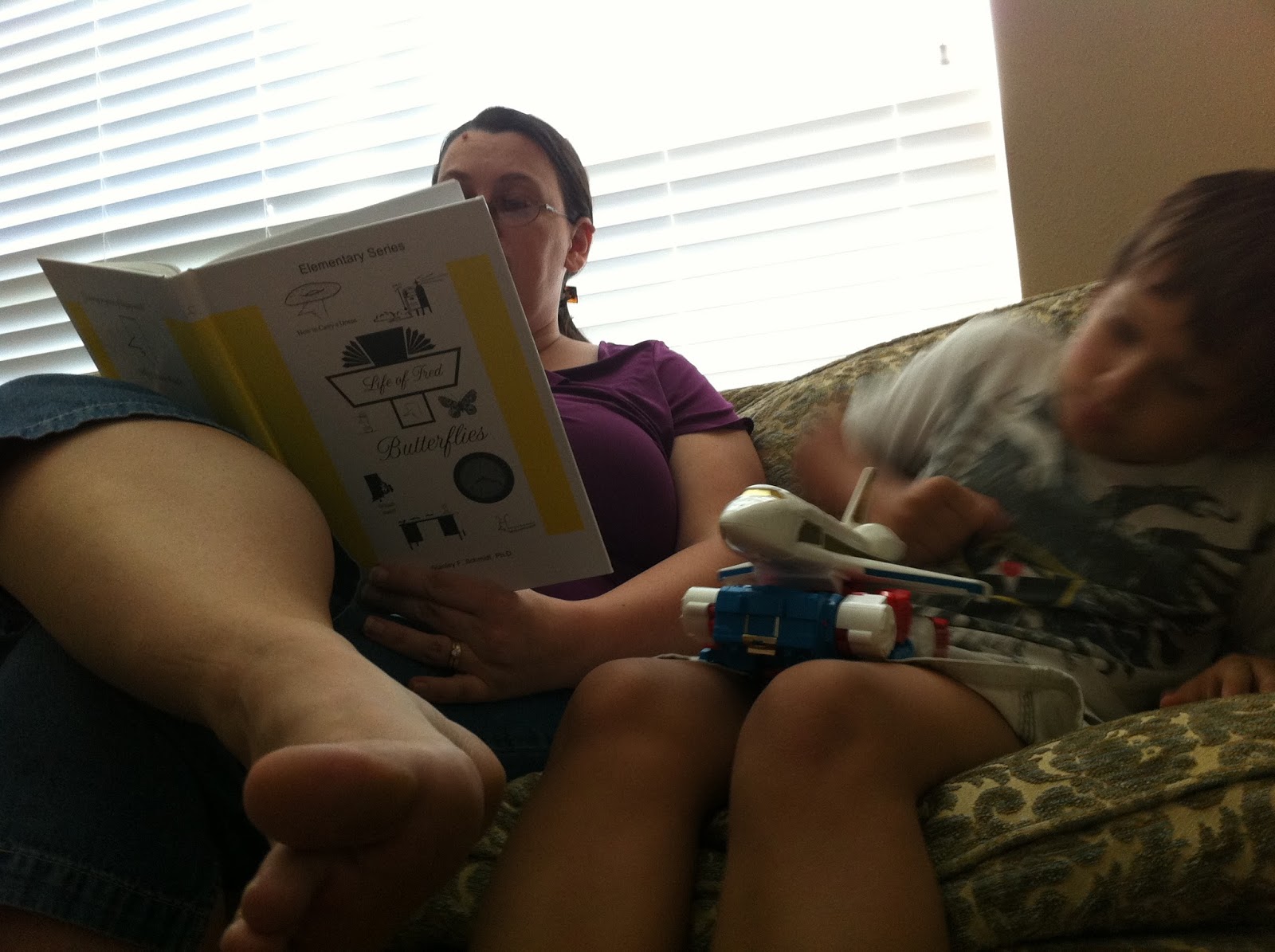
I check in on her occasionally, but she's pretty self-sufficient. She usually gets 3-4 hours of reading time in reading literature, history, science encyclopedias, and poetry. Then she works primarily in Fred Math and occasionally in Teaching Textbooks math on the computer. She also has language arts on the computer plus some workbooks she works on. She's officially finished with school at 4:00, but normally assigns herself "homework" just for fun (such as a map and color sheet for history) and reads a little before bed as well.


While Abby begins working on her own, I work with Abram. We have one-on-one time working on flashcards in math, reading lessons, and workbook pages. Then we work on his computer curriculum for a while, some of which he needs my help on and some that I can just remain nearby just in case. I try and steal away a little time to read Bubzy a story or two and spend some one-on-one time with him as well. Some days it happens and some it doesn't.


I remember Abby needing a whole lot of side by side time with me in third grade, too. I try and leave the school work that Abram can primarily do by himself for 4:00. I start cooking dinner around that time, but he's at the kitchen desk where I can stop and glance over his shoulder when he needs me. Usually Abram gets a little playtime in the playroom while I put Bubzy down for a nap, so his schoolwork lasts a little past Abby's. About 4:30 or 5:00 we're finished and all exhausted.


Linking Up to these Amazing Blog Parties:

Titus2Tuesday


It's Overflowing

Thursday, September 5, 2013

Home-schooling: How I Teach My Children to Read

Warning: Very Long Post

Gosh, how do I even begin to tell you how I do this?

Teaching a child to read isn't just about teaching them their ABCs and getting to a point where they can read words without your help. It's so much more than that. It's guiding a child from

here (interest in books and letters)
 
 to here (catching them reading beyond what's assigned),
 
 and beyond. It's being able to sound out a word, but it's also understanding books read to them that are above their personal reading level. There's two distinct but intermingled parts to reading: reading and comprehension. The goal (at least in our home) is for each child to be able to read aloud and then to themselves well, to be able to understand more and more difficult and deeper literature, and to learn to enjoy reading for the purpose of learning and personal entertainment.
 
In my experience, reading comprehension has been a natural part of learning. I just read aloud to them again and again and again and again..........and again. Then, as they got old enough, I began asking them to tell me about what they just read or heard. We chose a large variety of books in different subjects and taught them to listen to longer and longer stories and chapters. If they tuned out and couldn't tell me anything about the reading, they endured a repeat reading at times. Their ears learned to perk up after a few times of re-reading a story, chapter, or poem.
 
Teaching children to decipher words and put them together to read sentences is much more complex, but only takes a short (in the span of their entire education) time. Where comprehension grows and continues to grow into adulthood, learning to decipher words (learning to read) is a temporary subject. Once they know and know well how to read, they know for good. For this reason, reading is one of only two subjects (reading and math) that I actually teach until about third grade. Where they learn bible, science, history, art, etc, I only have to teach reading and math until then. Once they know how to read well, then I turn my teaching attention to other subjects previously skimmed over.  

Personal Experience:

I guess the key two concepts for me in teaching our children to read were patience and foundations.

Reading is a lot like learning to speak. It takes for.e.ver....and then WHAM...they get it and fly. Some children just seem to catch on and others need to know why c and k say the same thing, and want to know all the "rules". Those children hate the exceptions unless they can be explained. I'm glad I was a logical child or I would have lost my patience.

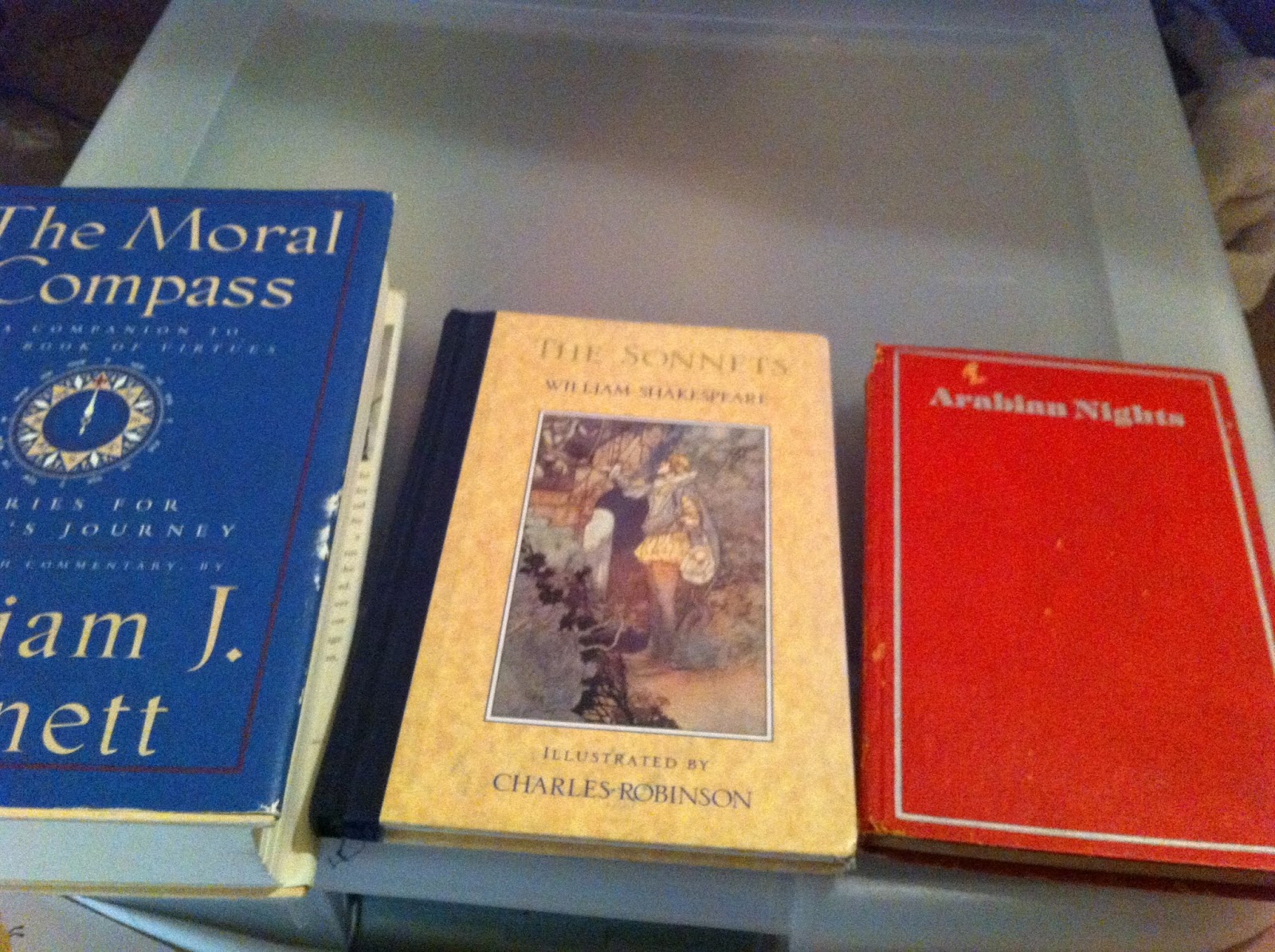
It seems logical to plan ahead in reading (learn A in week 1, B in week 2...week 27 start learning 'at' words), but it just doesn't always work that way. Abby took an entire year to learn her alphabet and some of the sounds they make, then another year to learn just the cvc (consonant, vowel, consonant) words. I thought I would die! I had to clamp my lips shut, pray, and then calmly remind her what 'e' sounded like for the millionth time. When she was 8 (four years after I began the long journey of teaching her to read), all of a sudden she grew in leaps and bounds. In third grade, she went from cvc and cvcv words to small chapter books! Every few months, there was a leap in understanding, until mid-4th grade I was giving her full blown books, encyclopedias dedicated to history and science, and she began reading longer and longer teeny-bopper novels for fun. It wasn't just spouting off words, either. She was telling me all about the stories and what she had learned. Now, just beginning 5th grade, I'm confident giving her The Hobbit, Little Women, Arabian Knights, Island of The Blue Dolphins, and many others like them. She was my logical learner. She had to know why each letter "behaved" the way it did. Abby needed time, lots and lots of time, but once she learned, she was a confident reader.

Abram, on the other hand was totally opposite. I tried to teach him like Abby and he wasn't interested. I let it go. He was only 4 and I could wait. Then, at 5 years old, without ever giving him a formal lesson, I decided it was time to start. I pulled out the ABC books, settling in for the long haul. He knew over half of them the first day!! What?!! Then, Abby casually mentioned that she had taught him. Wow! I just skipped her first half a year of lessons. Within a couple of months, he had learned the entire alphabet and knew a lot of the sounds they made. Where was I in the 'book'? I skipped ahead to the cvc words. He picked them up at profound speeds. (Abby had been "playing" school with him!) The books that took Abby a year to get through, took him a couple of months. About mid year in 2nd grade, though, he just stopped moving ahead. He never quit reading what he had learned, but he just didn't move beyond that point. He's now just beginning 3rd grade, and we're in the same place. But, now, eight years into home-schooling, I'm getting used to these variations in learning speeds within the same child. I've learned to have patience when things seem to be at a stand-still. I've learned to stay consistent in requiring reading practice even when it's the same thing again and again. And, I've learned to skip ahead when they're ready. Even though he was my "easy" one in reading, I had to be careful. Somewhere along the way I clued in that he was just really good at memorizing, but when something new would come up he didn't know how to decipher it. I began adding in the 'whys' in small doses as we read. When you see 'ou' together, it usually says "ow" as in ouch. How many vowels are in that syllable? What happens when there's two vowels? Right. The first one says it's name and the second is silent. Good. But where Abby needed word after word lessons in this, Abram just needed to be taught and reminded while in the middle of books. He was my "natural" reader.

Teaching Tools:

Here are the reading curriculums and supports that have been consistently loved and valued with me and my children and how I use(d) them:

Before Readers:


A good, durable set of ABC flashcard.
These were individual mini books and we love them. While the older children are doing lessons, they're great to scoot around the floor, pick up and look at the pictures, stack and knock down...and then bring one of us a card and ask, "What's that?" That one's "I". It says "ih". And then he's back to playing. Abby had a really nice set of flashcards from Baby Einstein, and then we switched to these when Abram was little.


This little stack (plus a really good set of children's literature) is all I use for reading until they're ready for readers. 


This book was full of common sense reminders and suggestions. It has a lot of ideas about adding language learning to a child's everyday life. It includes poems, short stories, language games, activities, and teaching ideas. 
 
An Acorn In My Hand is a gem by Ethel Bouldin that really taught me how to teach reading. I didn't use it with my children until they were 4 or 5, but I've read it over again every time a child's on the brink of beginning to learn to read. It shows you the basics of how words are put together, what letters make what sounds, what combinations of letters make what sounds, and how to teach them. This and a good white board were all I used for formal lessons with Abby until she was ready for readers. Search for it and if you can find this old book, snatch it up!

 
A peek inside:


This was a fun read that I've done with every one of my children on a daily basis when they first showed interest in letters. They loved hearing the sounds the letters made in cute little poetic verses. Soon, they were reciting the letters and sounds with me and pretending to read the book. I've gone through two of these books because it wears plum out. 
 
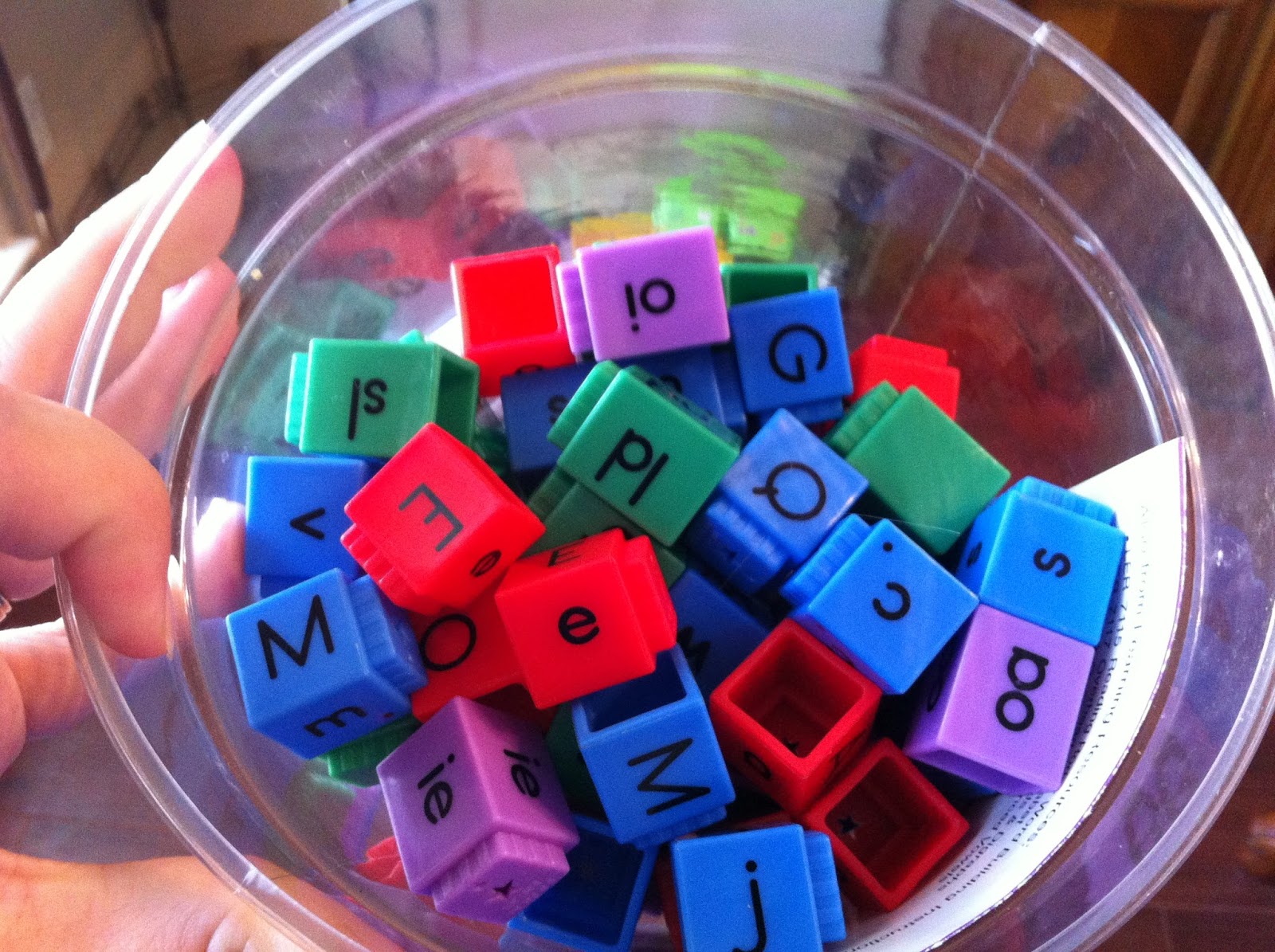
These are another gem that I'm about to have to replace because we're missing quite a few. The children loved having letters they could handle off the page!!! They could literally put together and take apart words, rearrange sounds, and so forth. Our children start playing with these before they learn to read, but continue with them long after that. Later, the olders use these for spelling, too.
 

Beginning Formal Lessons and Early Readers:


(sorry, my pictures aren't rotating)

This is the all-inclusive teaching guide I use. It goes all the way from teaching the alphabet to the last formal lessons they'll need. It's very similar to An Acorn In My Hands in theory, but spreads it all out in individual lessons. When my children start the first lesson in this book, they aren't even confident in their ABCs and sounds. By the time we've made it through the book, they're reading full-length novels. It's really packed and thorough.
 
I don't actually use this book every school day. I use it to find holes in their reading. We'll sit and do lesson after lesson until I hit a page they didn't know very well. Then I know what to point out when they're reading, what to work on with the white board, what to remind them of over and over again, etc. Then, when they've learned that concept, I move on in the book again. 

A peek inside:

 
There's actually four books in this set, but one of them is probably in my son's bedroom or underneath the couch. These follow the same general phonetic steps as how I teach reading, so I use them on a consistent basis. These are daily practice, where the books below are read it through until you know it and move on. We work on these at the same time as the one's below.

We love these! Dr. Suess and P.D. Eastman aren't the greatest in Children's lit, but they're enjoyable and memorable. They also use common words over and over again, adding to the child's fluency in reading. These are the first to disappear for plain ol' enjoyment reading.
 
 These are the ONLY workbooks I use for Reading. They're easy to understand, you probably won't need the teacher's guides, and the kids' love them. Get Ready, Get Set, and Go For The Code work all the way through the alphabet and practice a little early handwriting, too. Explode the Code 1-8 work their way from early cvc words through as far as you'll want to go before skipping on to higher level workbooks. They're just fun and good practice.
 
Our Early Readers are selected with care. I let them pick a few readers just for fun, like Disney Princess or Transformers, but I want most of their readers to be an early introduction to the variations they'll get into later. Their books include stories, poetry, "chapter" books,
 history,
 Science, early biographies,
and various cultures.
 
 
About half of their Science, History, and other subjects are learned from real books we read aloud to them, and the other half is learned from reading books like these.
 

Early Chapter Books and Beginner Novels:

 
When I say "early chapter books", some may not know what exactly I mean.
 
I mean books about this size,


 with more words on a page then they're used to, but they still have lots of pictures. They are divided into mini-chapters lasting about 4-10 pages. The idea is to build endurance in reading more than to give them harder words. At this point, the formal lessons continue for word-building, and these start being their primary source of fluency practice.
 
I highly recommend the Magic Tree House books! If you'll notice in the picture below, #34 is quite a bit thicker than book #1. This series is great about gradually increasing reading endurance, with great adventures through history grabbing boys and girls attention. They're fabulous!
 
Gradually, their endurance increases.
 
 
At this point, I start handing over more and more bits of their everyday learning to them. All those gorgeous Usborn Encyclopedia's in history and science subjects are now part of their responsibility. The history book they're used to listening to, they're now reading to themselves. I gradually start challenging them to a couple of real novels (no longer dumbed down for children). I no longer have them reading out loud to me, but they still have to tell me about the book. I still believe reading aloud is important, but now it's to a littler sibling. I casually listen in to see how they're doing and to catch any words/sounds that may need reviewing.


Then, the day comes when you see huge changes.

They're ready for the books you read!!
They're reading the bible instead of turning their lights out!!
They're up in the tree house with a backpack full of all sorts of books!!
They're sneaking off with your favorite cookbook to see if they have everything for Chocolate Chip Cookies!!
They're learning history stories you were never taught or remember!!
They're eating anatomy books for breakfast!!
They're half way through a guitar how to book they found in an old box!!
They're bedroom floor is littered with novels!!


 Linking Up to these Amazing Blogs:

Friday, August 30, 2013

Why I Homeschool: The Big Question

Home-schooling has it's way of becoming the broken leg you can't seem to get rid of when it comes to questions. Have you ever broken anything and the cast seems to ring the perpetual bell, calling all nearby who notice to ask you, "What happened?"? At first you reply with long explanations, trying to help them "see" the whole picture. After a while, though, you're bound to start answering with quick little, "Fell down the stairs".

Answering people about home-schooling becomes a little like that. At first I wanted to really help them understand with full-blown explanations, a list of books I had read, and statistics. Later, it became, "Eh, I just love to teach my kids" with a shrug and a change of subject.

You learn after a while there are three questions in the same one:

So, why do you home-school anyway?
Interpretation: Are you nuts/crazy?

Why is it you home-school, again?
Interpretation: Do you really think you're way is better than ours?

I'm curious why you home-school.
Interpretation: I'm curious why you home-school.

Even though it's not necessary to run through a list of whys every time someone asks you, it is important to sit down every now and then and find out the answers for yourself. A shift or change in why you home-school can determine what curriculum you use, whether or not you keep home-schooling, or what extra curricular activities become a part of your life or get cut off the list.

The truth is, I don't even know all of my own whys. I know some of them really well and others I sort of run into...like, yep, there's another reason. Other reasons grow, change, shift or even disappear over time.


Here are some of mine:

  • I feel called to home-schooling. For some, that may seem like a cop out answer, but I don't think so at all. God knows all things, including where our family and our children are headed. God can see the future and I can't...so in trusting His direction for my life and the lives of our children, we also trust Him in our destinations. Josh and I prayed from the time we were married until our oldest was two years old, seeking God's direction in this area. I was mainly public schooled and Josh was primarily home-schooled, so we saw this decision coming even before we had children. If I had no other reason than this, it would be good enough for me to obey God in what He called me to.
  • Individualized Study--other than the previous reason, this is probably my strongest pull in home-schooling. If every single teacher and leader in the school were a Christian, prayer were still allowed in the classroom, bible taught as a subject in equality with math, and every child was a good influence on our children...I would still home-school. I absolutely love the freedom to allow studies to take off in wonderfully deep directions. Knowledge is limitless and I don't believe that every child needs to know the same exact bits of it. Sure, every child needs to know how to read and do basic math, but who's to say that one child doesn't need a spoonful of Columbus and a feast of Roman Civilization? Who's to say one child needs merely a basic understanding of mathematics and another child needs to spend hours a day leaping ahead to understanding numbers at a level rarely taught in elementary studies.
  • Learning in the home atmosphere--this is one that developed over time for me and is now one of my favorite benefits of home-schooling. When we first started, I set the kids down at the table and we had a specific place and time to study. Now, our entire home and yard are places of learning. The day I gave into this was the day I found the joy of home-schooling. On a cool spring day, I may find one child balled up in a quilt on the front porch reading "Heidi" and drinking Chai Tea and the other child up a tree with a spiral notebook writing a story. On a hot day right before or after summer break, it wouldn't be unusual to find both children in a wade-pool in the middle of lunch break and then swinging in their swimsuits with a good book. I've found that the more comfortable my child is the better the information sinks in (with a few exceptions like handwriting and math drills).
  • "The fear of the Lord is the beginning of knowledge..." Prov. 1:7. I believe this. I believe that all knowledge, not just biblical knowledge, begins with the utmost respect and reverence of God. Step by little step, I think public schools are being pushed further and further away from the respect and reverence of God. I think that separating God from knowledge is about like separating H2 from O and expecting to be hydrated anyway. There are some parents who can and do work at mixing God back into their child's public school education successfully. My parents did. I personally feel like that would be an uphill battle too complex for this mama.
  • I wanted for my children what God told the Israelites to do to teach their children. "These words, which I am commanding you today, shall be on your heart. You shall teach them diligently to your sons and shall talk of them when you sit in your house and when you walk by the way and when you lie down and when you rise up..." Deuteronomy 6: 6-7 (but really 6: 1-9). I envisioned for my children that everything they learned, along with the knowledge of God's ways, would be integrated into every aspect of their lives--while cooking breakfast as well as while playing outside, while studying the bible and while studying science, in good days and in bad, all throughout the day. I wanted to be in the middle of a math lesson and be able to grab an apple out of the fridge to show them what 1/8th looked like. I wanted to be out in the back yard picking Basil, and be able to compare it to the pruning that God does in our own lives to allow us to grow. And, I wanted these kind of lessons to happen on the spur of the moment. Home-schooling provided the greatest opportunity for this in our family.
  • Learning to live, not just to learn--this wasn't one I really thought about ahead of time, but more realized as time went on. Learning was our primary goal as we home-schooled, but I had lots of one on one time with each child to teach things beyond book learning. Abby's now 10 and has been able to cook simple meals, wash dishes and clean up the kitchen, run the washer and dryer, and change a diaper for the past two years. Recently, Abram has taken on learning to run the washer and dryer. He's also been helping unload and reload the dishwasher the past couple of years. Both of my older children know how to understand what Bubzy (almost 2) wants as well as I do. They've learned his toddler speech along with me. It's not unusual when I get sick, for Abby and Abram to pretty much take over for the day.
  • I love teaching! There is something so special about seeing the light in your child's eyes brighten when s/he finally understands something that's been a challenge for them. When my oldest was learning to read, it brought me to tears every time she hit a new milestone. We had learned it together. I had learned how to teach a child to read and she had learned to read. It was an amazing feeling!
  • As a bonus, I don't have to worry near as much about drugs, violence, promiscuity, and bullying when they school at home. All children, whether schooled in public school, private school, or home school still face temptations when they're around others. It just happens. When I hear from teacher friends and people working in the schools, however, I know that kids have changed a lot since I was there. It's not uncommon to hear of gang activity, sexual activity as early as 5th grade (shocking!), drugs, and bullying. Children who school at home still play with kids in the neighborhood, go to club or sports activities, and Sunday school. However, the numbers of children and the somewhat controlled environment do tend to decrease the chances of the most serious worries. One cul-de-sac in our own neighborhood has less variety of influence than an entire cafeteria of children. It's just numbers. There are non-Christian people and kids that go to church, but far more that are believers than not. You may still find a bully on the basketball court, but sports and club activities are full of children who's parents care. You rarely have gangs and violence coming from these families--wherever their children go to school. It's not full-proof protection, but it does reduce exposure to the worst of the worst.
  • I have the time. Flexibility is so important to have when teaching children. They may fly through several lessons and then get stuck on one thing. At home, I have the time to sit day after day on that same foundational information my child needs to learn before continuing on. It may seem quite a bit slower, but there aren't many holes in their education. That doesn't mean my time isn't packed to the gills during school--I just have the freedom to spend that time where the child needs it.
  • And last, but definitely not least, I want my children to see themselves for who they are as people and not by what grades they make or who they hang out with or what bag they carry.
Linking Up to these Amazing Blogs:
Titus2Tuesday

Related Posts Plugin for WordPress, Blogger...